Who we are and what you accept
This notice applies to WAR CHEST (WARTIME) (the “Site”, which includes every game, tool, market, bridge, feed, page and app served from it) and is issued by the people who independently build and operate it (“we”, “us”). By loading or using the Site, connecting a wallet, submitting anything to it, or interacting with any contract, feed or feature it exposes, you accept this notice in full. If you do not accept it, do not use the Site.
No professional advice
Everything on the Site is general information, entertainment or opinion. It is not financial, investment, trading, legal, tax, accounting, medical or other professional advice, and nothing here is an offer, solicitation, recommendation or endorsement to buy, sell, hold or use any asset, product or service. Do your own research and consult a licensed professional before acting on anything you read here. Prices, balances, supplies, burns, scores, statistics and other figures are read from third-party services or public blockchains; they may be delayed, incomplete or wrong and must be verified independently before you rely on them.
Digital-asset risk
Tokens, NFTs and other digital assets mentioned or supported on the Site are highly speculative and extremely volatile. They can lose all of their value, may have no market or liquidity, and may stop working or lose any utility at any time. They are not currency, deposits, securities, shares or investment products; they carry no equity, dividend, revenue share, voting right or claim against any business or person; and we make no promise, forecast or representation about price, value, supply, burns, listings, partnerships, development, roadmaps or the future of any project. Community or meme tokens in particular have no intrinsic value and no obligation of any kind stands behind them. Never risk more than you can afford to lose entirely.
Smart contracts and irreversibility
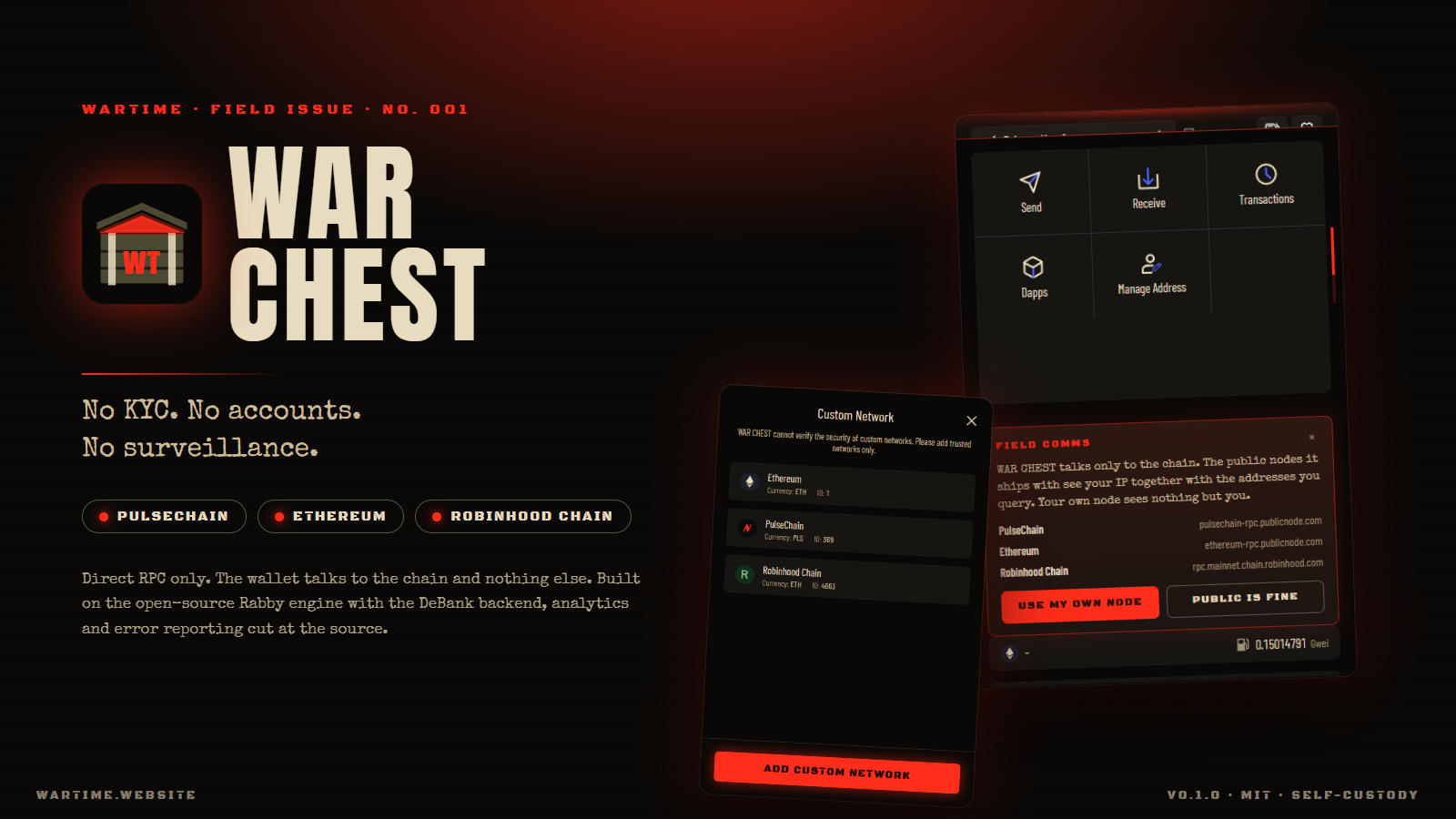
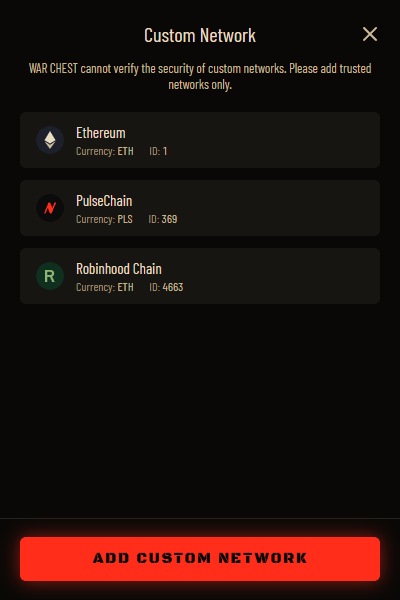
The Site is an interface to autonomous smart contracts running on public blockchains (including PulseChain, Ethereum and Robinhood Chain). Those contracts execute exactly as written, cannot be reversed by us, and may contain bugs, vulnerabilities or design flaws; unless the Site expressly states otherwise, they have not been independently audited. Blockchain transactions are final: they cannot be cancelled, reversed or refunded, and mistakes (wrong address, wrong amount, wrong network, front-running, failed or stuck transactions, signing a malicious request) are permanent. Fees, royalties, tolls, burns and similar mechanics described on the Site are carried out by contract code; the descriptions explain how that code works and are not guarantees of any economic outcome. RPC nodes, indexers, price feeds and explorers used by the Site are run by third parties and can be slow, wrong or unavailable — always confirm anything important on an independent block explorer.
Self-custody
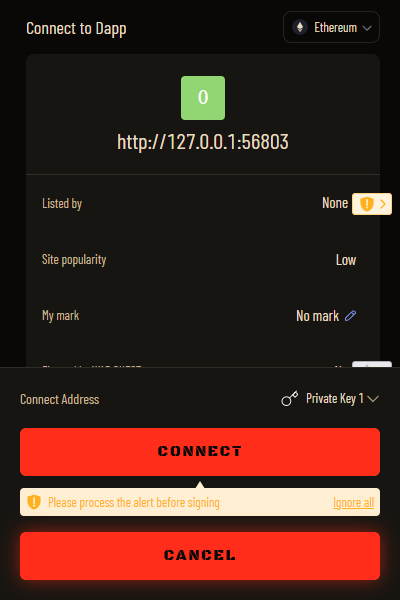
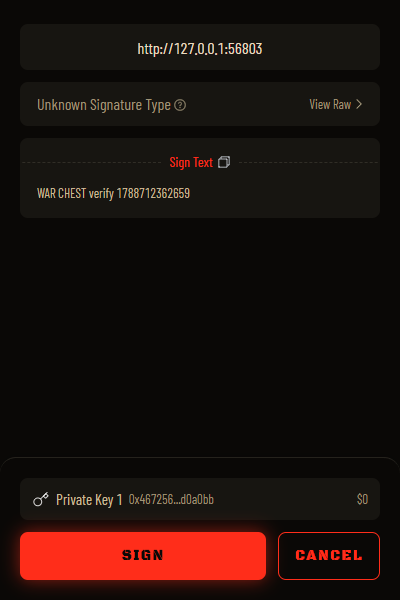
The Site never holds, controls or has access to your wallet, private keys, seed phrase, tokens or NFTs. You alone are responsible for the security of your wallet and devices, for reviewing every transaction and signature request before you approve it, and for any loss caused by malware, phishing, a compromised device, a malicious contract or your own error. We will never ask for your seed phrase or private key, and anyone who does is not us.
No affiliation
The Site is independently operated. It is not affiliated with, endorsed by, sponsored by, approved by or otherwise connected to Rabby, DeBank, PulseChain, the Ethereum Foundation, Robinhood Markets, Inc. (Robinhood Chain), or Google or the Chrome Web Store, or any other company, network, protocol, project, agency or person named or depicted on it, and none of them has reviewed or is responsible for anything here. Their names, marks, logos and likenesses are used solely for identification, commentary or parody and remain the property of their respective owners.
Third-party services and links
The Site relies on and links to services we do not control — blockchain networks and RPC nodes, wallets, explorers, price and data APIs, hosting providers, social platforms, portals, public agencies and other websites. We do not endorse them and are not responsible for their content, availability, accuracy, security, pricing or conduct; your use of them is governed by their own terms and privacy policies, and a link is not a recommendation.
Eligibility and lawful use
You must be at least 18 years old, or the age of majority where you live if that is higher, to connect a wallet, trade, mint, bridge, wager, submit material or otherwise transact through the Site. You are responsible for knowing and complying with every law that applies to you, including tax, securities, gambling, consumer-protection, sanctions and export rules. The Site is not directed at, and must not be used from, any jurisdiction where its use or content would be unlawful, and you confirm that you are not on any sanctions list and are not located in, or ordinarily resident in, a country or territory subject to comprehensive sanctions. You must not attack, exploit, overload, scrape abusively, tamper with, reverse-engineer for a harmful purpose, or otherwise interfere with the Site, its contracts, its servers or other users, and you must not use it to launder money, evade sanctions or commit any other crime.
Privacy
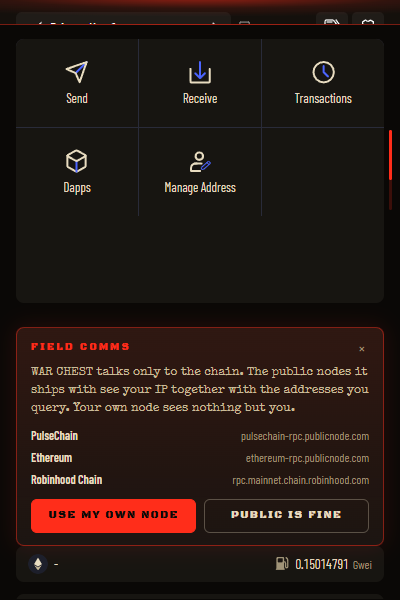
We do not intentionally collect personal data, sell data or run advertising trackers; preferences the Site keeps live in your browser's local storage, and our hosting provider keeps standard access logs. Anything you write to a public blockchain — including your wallet address, balances, holdings and transaction history — is public, permanent and outside our control, and the third-party RPC nodes, APIs and hosts the Site calls will see your IP address and requests under their own privacy terms.
No warranty
THE SITE, ITS CONTENT, CONTRACTS, CODE, GAMES, TOOLS, DATA AND ANY ASSET OR OUTPUT OBTAINED THROUGH IT ARE PROVIDED “AS IS” AND “AS AVAILABLE”, WITH ALL FAULTS AND WITHOUT WARRANTY OF ANY KIND, EXPRESS, IMPLIED OR STATUTORY, INCLUDING ANY WARRANTY OF MERCHANTABILITY, FITNESS FOR A PARTICULAR PURPOSE, TITLE, NON-INFRINGEMENT, ACCURACY, COMPLETENESS, AVAILABILITY, SECURITY, OR FREEDOM FROM ERRORS, VIRUSES OR HARMFUL CODE. WE DO NOT WARRANT THAT THE SITE OR ANY CONTRACT WILL BE UNINTERRUPTED, TIMELY, SECURE OR ERROR-FREE, THAT DEFECTS WILL BE CORRECTED, OR THAT IT WILL MEET YOUR REQUIREMENTS.
Assumption of risk and limitation of liability
YOU UNDERSTAND THE RISKS DESCRIBED IN THIS NOTICE AND USE THE SITE, AND ANYTHING YOU OBTAIN THROUGH IT, ENTIRELY AT YOUR OWN RISK. TO THE FULLEST EXTENT PERMITTED BY LAW, WE AND EVERYONE WHO CONTRIBUTES TO THE SITE ARE NOT LIABLE FOR ANY INDIRECT, INCIDENTAL, SPECIAL, CONSEQUENTIAL, EXEMPLARY OR PUNITIVE DAMAGES, OR FOR ANY LOSS OF PROFITS, REVENUE, DATA, GOODWILL, DIGITAL ASSETS, TOKENS, NFTS, GAME PROGRESS OR OPPORTUNITY, ARISING OUT OF OR RELATING TO THE SITE OR ANYTHING DONE THROUGH IT, HOWEVER CAUSED AND UNDER ANY THEORY OF LIABILITY (CONTRACT, TORT, NEGLIGENCE, STRICT LIABILITY OR OTHERWISE), EVEN IF WE WERE ADVISED OF THE POSSIBILITY. WHERE LIABILITY CANNOT BE EXCLUDED, OUR TOTAL AGGREGATE LIABILITY FOR ALL CLAIMS IS LIMITED TO ONE HUNDRED US DOLLARS (US$100) OR THE AMOUNT YOU PAID US FOR THE SITE IN THE TWELVE MONTHS BEFORE THE CLAIM, WHICHEVER IS GREATER. Some jurisdictions do not allow certain exclusions or limitations; where that is the case they apply only to the extent permitted.
Indemnity
You will defend, indemnify and hold harmless us and everyone who contributes to the Site from any claim, demand, loss, liability, damage or expense (including reasonable legal fees) arising from your use of the Site, anything you submit to it, your breach of this notice, or your violation of any law or of any right of another person.
Intellectual property and takedown requests
Except for third-party material identified above, the code, art, text, audio, design and data compilations of the Site are ours and are protected by copyright, trademark and other laws; you may not copy, sell, redistribute or create derivative works from them without permission, except as any open-source licence we publish expressly allows. If you believe material on the Site infringes your copyright, trademark, privacy or other rights, or is inaccurate about you, tell us through the contact or social links shown on the Site with enough detail to identify the material and your interest in it, and we will review the request promptly and in good faith.
Changes, governing law and general terms
We may change, suspend or discontinue any part of the Site, and may update this notice, at any time by posting a new version here; your continued use after a change means you accept it. This notice is governed by the laws of the State of Texas, United States of America, without regard to its conflict-of-law rules, and any dispute that cannot be resolved informally will be brought exclusively in the state or federal courts located in Travis County, Texas, to whose jurisdiction you consent. If any part of this notice is held unenforceable, the rest remains in effect. Nothing here creates any partnership, agency, employment or fiduciary relationship between you and us, and our failure to enforce a term is not a waiver of it. This notice is written in English; translations are for convenience only.
 WARTIME